%2Ffit-in%2F250x250%2Fguide_websites%2F134316%2Fimages%2F1780375947431logo.jpg&w=1920&q=100)
Striped Bass & White Bass Catch in Rogers AR
Striped Bass Fishing in Rogers - What to Expect
%2F%2Fusers%2F6d8cf044-8f12-4e1e-8c8d-60135b1a00dc%2Fimages%2Frogers-ar-bass-fishing-success-2835.jpg&w=1920&q=75)
Guided Fishing Trip by Guide Johnny Phanphengdee in June

- Beaver Lake Striper Fishing Guide Arkansas


Summary
Join a guided fishing trip on Beaver Lake in Rogers, AR targeting striped bass and white bass. On Tuesday, June 2nd, Johnny Phanphengdee of Playin Hooke Striper Services demonstrates professional catch handling and species knowledge that keeps anglers coming back.
Striped Bass Fishing with Johnny Phanphengdee - Rates & Booking
Guide Johnny Phanphengdee of Playin Hooke Striper Services on Beaver Lake, Rogers, AR brings decades of practical experience to every guided fishing trip. With a focus on hands-on instruction and proven techniques, Johnny ensures both novice and experienced anglers maximize their success on one of Arkansas' premier bass fisheries.
This guided trip targets striped bass and white bass year-round. Whether you're looking for a half-day outing or full-day adventure, the experience includes professional guidance, insider tips on current conditions, and access to proven fishing locations. All tackle and technique instruction are provided. Arkansas fishing licenses are required and can be obtained online before your trip. Contact Playin Hooke Striper Services to customize your itinerary and confirm availability.
Highlights of Striped Bass Fishing on Beaver Lake
Beaver Lake stands as one of the most consistent striped bass destinations in the region. The lake's deep structure, cool clear water, and abundant forage create ideal conditions for these powerful fish. Johnny's expertise in reading seasonal patterns means you'll fish where stripers are actively feeding, not just where they might be.
The professional catch-and-clean service showcases the quality of fish available. Fresh-caught striped bass consistently reach impressive sizes on Beaver Lake, with white bass providing fast-action variety. The clean, organized presentation reflects the guide's professionalism and commitment to customer experience both on the water and during the educational components of your trip.
Local Species Insights: Striped Bass & White Bass
Striped bass are apex predators in Beaver Lake, known for aggressive feeding behavior and their ability to reach weights over 30 pounds. These fish are structure-oriented hunters, relying on the lake's channels, ledges, and drop-offs to ambush schooling forage. Understanding their habitat preferences is central to Johnny's approach. Stripers respond to both live bait presentations and artificial lures, and the guide matches tactics to seasonal water temperatures and fish activity levels.
White bass, the smaller cousin of stripers, are prolific breeders that school aggressively throughout Beaver Lake. They're known for their speed and willingness to strike, making them excellent for anglers developing their skills or those seeking consistent action. Mixed schools of stripers and white bass often feed together, creating exciting multi-species opportunities within single outing.
Beaver Lake's clarity allows Johnny to employ sight-fishing techniques during certain periods. The guide's understanding of forage patterns means you'll fish with appropriate presentations. Live shad, shiners, and soft plastics all play roles depending on conditions. Water temperature, moon phase, barometric pressure, and seasonal movement patterns inform every decision on the water.
White catfish, also present in the catch display, demonstrate the lake's diverse fishery. These bottom feeders provide additional interest and represent another species dimension to the ecosystem. Johnny's multi-species approach ensures you gain broad knowledge of Beaver Lake's aquatic environment.
The professional handling and presentation you see in the catch display reflects proper fish care protocol. Cooler management, minimal air exposure, and quick dispatch ensure quality and food safety. This attention to detail extends throughout every aspect of Johnny's operation.
Plan Your Fishing Day
Start early to take advantage of prime feeding windows. Beaver Lake's size means diverse fishing options within a single trip. Johnny will position the boat based on real-time conditions, water temperature, and seasonal patterns. Bring sunscreen, polarized sunglasses, and dress in layers as water conditions can cool mornings significantly even in summer months.
Typical trips accommodate small groups, allowing personalized instruction and attention. The guide handles all tactical decisions and boat positioning while teaching you to recognize productive structure and improve your casting accuracy. By day's end, you'll have gained practical knowledge applicable to future fishing adventures.
Fishing in Beaver Lake: White Bass, White Catfish and Striped Bass

White Bass Overview
The White Bass (Morone chrysops) is a member of the Moronidae family within the order Perciformes, and it's one of North America's most beloved freshwater game fish. Also known as Sand Bass or Silver Bass, this spirited fighter is instantly recognizable by its silvery-white to pale green coloring, darker back, and distinctive narrow dark stripes running along its white belly and sides. What makes the White Bass truly special is its reputation as an aggressive and hard-fighting catch that delivers both excitement and exceptional table fare. In fact, it's the state fish of Oklahoma and has become a significant sport fish in Manitoba since its introduction there in the 1960s. Whether you're a seasoned angler or a curious outdoor enthusiast, the White Bass represents an authentic fishing experience that combines natural beauty, thrilling action, and genuine culinary reward.
White Bass Habitat and Distribution
White Bass thrive in a wide range of freshwater environments across North America, with the largest populations found in the Midwest and Great Lakes region. These fish are fairly distributed throughout the United States, with particularly strong populations around Lake Erie and Pennsylvania. Native populations inhabit Lake Poinsett, the Detroit River, Arkansas River, the Great Lakes system, and the Red River drainage, with additional populations in Wisconsin's Winnebago lakes and throughout Mississippi River systems. They prefer large rivers, shallow reservoirs, streams, and creeks—environments where they can find adequate prey and spawning grounds. White Bass typically congregate in schools upstream where prey density runs high, making them predictable targets for anglers who understand their movement patterns. Their adaptability has allowed them to establish strong populations in many reservoirs and impoundments across the country, making them accessible to recreational fishers in diverse geographic regions.
White Bass Size and Weight
White Bass typically measure between 10 to 12 inches in length, though exceptional specimens have been recorded at 18 inches or longer. Most fish caught by recreational anglers range from 1 to 5 pounds, with average catches in the 2 to 3-pound range. Some larger individuals, particularly in well-managed reservoirs and river systems, can reach weights up to 7 pounds. Size can vary considerably depending on water body health, prey availability, and population density. In areas with abundant forage fish and lower competition for food, White Bass tend to achieve larger sizes more quickly. Understanding these typical size ranges helps anglers set realistic expectations and choose appropriate tackle for their fishing adventure.
White Bass Diet and Behavior
As a carnivorous visual feeder, the White Bass actively pursues a varied diet that includes leptodora, daphnia, cyclopoid copepods, and calanoid copepods, depending on life stage and water conditions. Adult White Bass eagerly consume small minnows, shiners, and other forage fish, making them responsive to live bait presentations. They're known for their aggressive feeding behavior and will readily strike artificial lures, particularly during active feeding periods. White Bass exhibit schooling behavior, often forming tight pods that move together through preferred habitat. They're particularly active during low-light conditions—early morning, evening, and overcast days—when they venture into shallower waters to feed. At midday, they typically retreat to deeper, cooler zones. These fish are visual hunters, so they respond well to lures that create vibration and flash. Their aggressive nature is one reason they're so popular with anglers; they rarely hesitate to strike when properly presented with the right offering.
White Bass Spawning and Seasonal Activity
Female White Bass spawn between mid-March and late May, depending on water temperature and geographic location. During this spawning period, females produce an impressive 240,000 to 930,000 eggs—a reproductive capacity that supports healthy populations in managed fisheries. The White Bass has developed an unusual mating ritual where males bump against the female's abdomen to stimulate egg release. Once stimulated, the female rises near the surface, begins a distinctive spinning motion, and releases her eggs while males simultaneously fertilize them. This behavior often creates visible surface disturbances that alert observant anglers to spawning activity. Spring fishing can be exceptional during the pre-spawn and early-spawn phases when White Bass move into shallow areas and feed aggressively to prepare for reproduction. Understanding this seasonal pattern helps anglers time their trips for maximum success and allows them to witness one of nature's most dramatic natural spectacles.
White Bass Techniques for Observation and Capture
Surface Spinner and Spoon Method: Once you locate a school of White Bass, use spinners or spoons worked along the water surface to entice aggressive strikes. Cast parallel to structure and retrieve steadily with occasional pauses. This method works exceptionally well during early morning and late evening hours when White Bass feed in shallow water. The flash and vibration of spinners and spoons trigger predatory responses, making this technique highly effective for active fish.
Artificial Jig Presentation: Small jigs (1/8 ounce) tipped with black or white marabou are excellent artificial lure choices. You can also use soft plastic lures such as tube baits, small jig heads with curly tail grubs, or 1/8 to 1/4 ounce jigs rigged with soft plastic swimbaits. Cast near structure, ledges, and drop-offs, allowing the jig to flutter and bounce along the bottom. This technique works well both day and night and gives you excellent bottom-contact opportunities. Around areas like Lake Erie and Pennsylvania, jig fishing near rocky structure and underwater humps produces consistent results throughout the season.
Night Bottom Fishing with Live Bait: White Bass often feed actively at night, making bottom fishing with live minnows or shiners highly productive after dark. Use a simple slip sinker rig with a small hook and live bait, positioning yourself near current breaks, channel ledges, or structural features. Cast and hold position, allowing your bait to work naturally. This method requires patience but often produces larger specimens and fewer competitive fish. Be prepared for aggressive strikes and keep your rod tip sensitive to detect bites in low-visibility conditions.
White Bass Culinary and Utilization Notes
The White Bass has earned an excellent reputation for its exceptional taste, making it one of the most prized eating fish in North America. The flesh is firm, white, and delicate with a mild flavor that's neither too gamey nor bland. It's versatile in the kitchen—excellent baked, pan-fried, grilled, or incorporated into fish tacos and chowders. White Bass contain healthy omega-3 fatty acids and provide solid protein nutrition. The fillets are relatively easy to prepare, and the absence of strong fishy flavors makes them appealing even to those less accustomed to eating fish. Many regions have liberal catch limits specifically because White Bass populations are healthy and abundant, making them an excellent choice for anglers seeking a rewarding culinary experience without concerns about sustainability. Whether you're a home cook or restaurant enthusiast, White Bass delivers consistent quality that justifies the effort of catching them.
White Bass Frequently Asked Questions
Q: What is the best bait for catching White Bass?
A: Live minnows and shiners are excellent choices, as White Bass are visual feeders that readily strike moving prey. Artificial lures like spinners, spoons, and small jigs also produce excellent results. The choice depends on whether you prefer live or artificial presentations and your target depth.
Q: Where can I find White Bass near Lake Erie or Pennsylvania?
A: White Bass are fairly abundant throughout Lake Erie and Pennsylvania waterways. Focus on rocky structure, drop-offs, and areas with current breaks. In reservoirs and rivers, look for schools along underwater humps and channel ledges. Early morning and evening hours near shallow feeding zones often produce the best action.
Q: Is White Bass good to eat?
A: Absolutely! White Bass has exceptional taste and firm, white, delicate flesh. It's versatile in the kitchen and works well baked, pan-fried, grilled, or in various fish recipes. The mild flavor appeals to broad palates, making it an excellent choice for family dining.
Q: When is the best time to catch White Bass?
A: Spring (mid-March to May) is peak season during spawning, when fish are actively feeding. Early morning, late evening, and overcast days are productive year-round. Night fishing can produce excellent results, particularly larger specimens.
Q: Why are White Bass considered aggressive fighters?
A: White Bass live up to their reputation with explosive strikes and determined runs once hooked. They rarely hesitate to attack well-presented lures and often jump during the fight, making them thrilling opponents for anglers of all skill levels.
Q: What regulations should I know before fishing for White Bass?
A: Each state maintains specific regulations regarding minimum size, daily catch limits, and seasonal restrictions. Always consult your local fishing regulations before pursuing White Bass to ensure compliance with current rules in your target area.

White Catfish Overview
The White Catfish (Ameiurus catus) is a fascinating member of the Ictaluridae family within the order Siluriformes, representing one of the smallest North American catfish species. Known for their distinctive white chin barbels—the whisker-like sensory organs that give them their common name—these bottom feeders are a prized catch for anglers seeking a rewarding coastal river fishing experience. What makes White Catfish particularly interesting is their ability to thrive in both freshwater and brackish tidal waters, making them a unique target species in estuarine environments from Maryland to the Carolinas and beyond. Their preference for sluggish waters and muddy bottoms, combined with their semi-nocturnal feeding habits, has earned them a reputation among anglers as elusive and challenging to catch consistently.
White Catfish Habitat and Distribution
White Catfish show a strong preference for sluggish freshwater bodies including lakes, ponds, streams, and rivers, though they're equally comfortable in reservoirs, drainages, and river backwaters. These fish are particularly notable for their tolerance of brackish and tidal waters, following the behavior of lunar cycles in coastal river systems that flow toward the Atlantic Ocean. They thrive in waters with muddy bottoms where crustaceans and small fish congregate—ideal hunting grounds for a bottom feeder. Water temperature is crucial for this species; they prefer temperate waters around 82 degrees Fahrenheit and can even survive in low-oxygen environments that would challenge other fish species. Despite their preference for freshwater habitats, White Catfish frequently inhabit tidal zones and can tolerate the salinity variations found in coastal river systems, making them increasingly common catches in estuarine areas from the mid-Atlantic states southward.
White Catfish Size and Weight
White Catfish typically range from 13 to 24 inches in length, with most catches weighing between 6 to 9 pounds, though this species is generally considered one of the smaller North American catfish. The average White Catfish encountered by anglers is small enough to hold comfortably in one hand, usually weighing between half a pound to 2 pounds in younger populations. However, exceptional specimens have been documented reaching 10 pounds or more, and these larger fish represent the dream catch for many dedicated anglers who spend countless hours pursuing this elusive species. The sexual maturity of White Catfish occurs at 3 to 4 years of age, and the species can live up to approximately 14 years in optimal conditions, allowing for the development of trophy-sized individuals in well-managed water systems.
White Catfish Diet and Behavior
As bottom feeders, White Catfish primarily consume aquatic insects, small fish, crustaceans, and various aquatic plants found along the substrate of their freshwater and tidal habitats. These fish possess subterminal lips—positioned underneath rather than at the front of their mouth—perfectly adapted for vacuuming up food from muddy bottoms. One of their most remarkable sensory abilities is the capacity to taste through their eight barbels, allowing them to detect food via touch rather than sight alone, which proves invaluable in murky coastal river waters and sediment-laden environments. While they're primarily nocturnal feeders with peak activity occurring at dusk and through the night, White Catfish aren't completely nocturnal and can be successfully caught during morning hours. Their feeding behavior is influenced by lunar cycles in tidal waters, making them more active during certain phases of the moon when tidal currents bring fresh food sources into their feeding zones.
White Catfish Spawning and Seasonal Activity
White Catfish demonstrate particular sensitivity to water temperature during spawning season, with egg-laying occurring when water conditions reach optimal ranges typically in late spring through early summer. Their reproduction strategy involves careful selection of suitable spawning habitat, and they become sexually mature after 3 to 4 years of life. The lunar cycles that govern tidal waters in coastal river systems also influence their reproductive timing and activity patterns. In tidal water environments, White Catfish follow the moon's gravitational pull, which affects water levels and current patterns critical to their spawning success and year-round feeding behavior. Understanding these seasonal and lunar-driven patterns is essential for anglers seeking to maximize their catch rates during peak activity windows.
White Catfish Techniques for Observation and Capture
Bait Casting Method: Bait casting remains one of the most effective techniques for White Catfish, utilizing specialized bait-cast reels positioned directly on the rod rather than mounted to the side like traditional spin reels. This configuration allows anglers to achieve longer casting distances and better control when targeting these fish in coastal river environments. Live bait proves most effective—worms and shrimp are classic choices—though chicken liver and cut bait from smelly fish work exceptionally well since White Catfish rely heavily on their chemosensory abilities to locate food. Cast near muddy bottom areas and structure where these bottom feeders concentrate their foraging activities.
Bottom Fishing Technique: Bottom fishing allows anglers to position bait directly where White Catfish hunt for their food. Rather than letting your bait rest stationary in the sand, allow it to drift slightly along the bottom, creating subtle movement that triggers the fish's sensory detection system. This method works particularly well during dawn and dusk hours when these semi-nocturnal feeders are most active. Focus your efforts in deeper holes within coastal rivers and around channel ledges where White Catfish congregate during tidal movements.
Localized Tip: Around tidal river systems in the mid-Atlantic and Carolinas, timing your fishing trips to coincide with slack tide or the early flood tide often produces excellent results, as these periods concentrate White Catfish in predictable feeding zones. Fish the deeper holes and channel bends where current pushes food directly into their hunting territory.
White Catfish Culinary and Utilization Notes
White Catfish have earned a reputation for providing good eating quality, offering firm, flavorful white meat that takes well to various cooking preparations. Their culinary value makes them an excellent target for anglers interested in both sport fishing and table fare. The meat quality is comparable to larger catfish species, though the smaller average size means you may need several fish to constitute a substantial meal. From a sustainability perspective, White Catfish populations remain stable in most tidal and freshwater systems where they're found, making them an environmentally responsible choice for consumption. Local tradition in coastal communities often features White Catfish in regional cuisine, particularly prepared fried or in fish stews that showcase their mild, delicate flavor profile.
White Catfish Frequently Asked Questions
Q: What is the best bait for catching White Catfish?
A: Live worms and shrimp are ideal choices, but if those aren't available, chicken liver and cut bait from smelly fish work excellently. White Catfish hunt primarily through their chemosensory barbels, so pungent or live baits that release scent into the water are most effective. The key is using bait that allows the fish to detect food through taste and smell rather than sight.
Q: Where can I find White Catfish in coastal river systems?
A: Focus your efforts in sluggish sections of tidal rivers, particularly where muddy bottoms and deeper holes provide ideal bottom-feeding habitat. In coastal river systems from Maryland to the Carolinas, concentrate on channel bends, deeper pools, and areas where tidal currents push food and sediment. Structure such as fallen trees, dock pilings, and channel ledges concentrates White Catfish during both feeding and resting periods.
Q: Is White Catfish good to eat?
A: Yes, White Catfish are considered good eating with firm, mild white meat that responds well to frying, baking, and stewing. The smaller average size means you may need multiple fish for a substantial meal, but they're increasingly popular in regional cuisine throughout the mid-Atlantic and coastal communities. Their sustainability and culinary quality make them an excellent target for anglers interested in fresh table fare.
Q: When is the best time to catch White Catfish?
A: While White Catfish are primarily nocturnal to semi-nocturnal, they can be caught throughout the day with peak activity occurring at dusk and extending through the night. In tidal waters, align your fishing with slack tide or early flood tide periods for the most consistent results. Early morning hours before sunrise also produce good catches when water conditions are calm.
Q: What makes White Catfish different from other catfish species?
A: White Catfish are the smallest North American catfish species and lack the distinctive black blob marking at the base of the dorsal fin found on other catfish. They're unique in their tolerance for tidal and brackish waters, following lunar cycles in coastal river systems. Their white chin barbels, from which they derive their name, are particularly prominent compared to other catfish species.
Q: What techniques work best for White Catfish fishing?
A: Bait casting with live bait and bottom fishing are the most productive methods. Bait casting allows you to cover greater distances in coastal rivers, while bottom fishing positions your bait in the muddy areas where White Catfish naturally forage. Combine these techniques with timing tied to tidal movements and lunar phases for optimal success rates in tidal water environments.
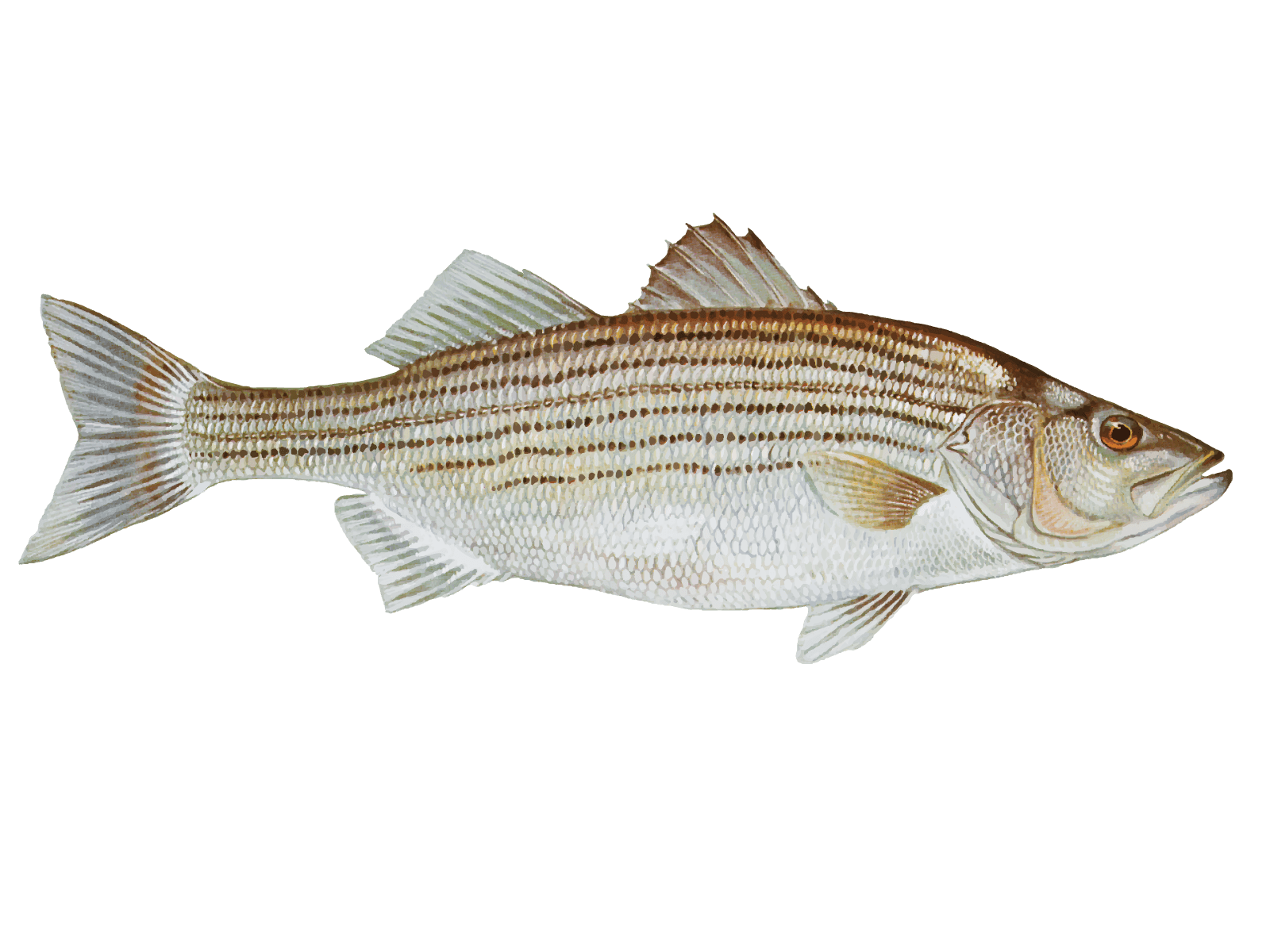
Striped Bass Overview
The Striped Bass (Morone saxatilis), belonging to the family Moronidae and order Perciformes, is one of North America's most celebrated game fish. Known affectionately as "stripers" or "linesiders," these powerful swimmers are instantly recognizable by their distinctive seven to eight dark horizontal stripes running down their silver-green bodies. With colors ranging from light olive to dark brown and black, topped with a shimmering white belly, the Striped Bass is a true trophy for recreational and commercial anglers alike. Found across diverse waters from the Atlantic coast to inland lakes and rivers, these remarkable fish have become legendary in fishing communities from New England to California, thriving in both saltwater and freshwater environments thanks to their remarkable adaptability.
Striped Bass Habitat and Distribution
Striped Bass naturally inhabit coastal waters along the Atlantic Ocean, ranging from Canada all the way south to the Gulf of Mexico. However, their popularity as a game fish has led to widespread introduction across North America, making them available in most major water bodies including rivers, lakes, and coastal areas. The Chesapeake Bay in Maryland stands as the premier striped bass producer, while the Hudson River between New York and New Jersey ranks as the second-most significant population center. On the West Coast, the San Francisco Bay and surrounding coastline offer excellent opportunities, while Colorado's lakes—including Lake Havasu, Lake Mead, Lake Powell, Lake Pleasant, and Lake Mohave—harbor abundant populations. These structure-oriented fish favor areas near reefs, sandbars, drop-offs, and shoreline features where they hunt for prey in moving water, typically remaining within yards of the banks where currents concentrate food sources.
Striped Bass Size and Weight
Striped Bass are impressive specimens that can reach substantial sizes in ideal conditions. Most fish caught by anglers weigh between 20 and 40 pounds, though they commonly grow to 20 inches minimum and up to 55 inches or more in length. The species has been documented reaching weights exceeding 80 pounds, with plump, muscular bodies that make them both visually striking and powerful fighters. Their size varies considerably depending on water temperature, food availability, and age, but what's consistent is their solid build—these aren't slender fish, but rather hefty powerhouses built for strength and endurance in variable water conditions.
Striped Bass Diet and Behavior
As voracious predators, Striped Bass feed primarily on smaller fish including herring, menhaden, mackerel, anchovies, and shad, along with other protein sources like eels, squid, and crustaceans. They're most active during low-light periods—dawn and dusk—when they move into shallower waters to feed. These fish are known for their finicky nature, being selective about what baits they'll accept, though live bait generally outperforms dead offerings because of the natural movement and vibrations that attract their attention. Despite their impressive size and strength, stripers aren't particularly fast swimmers, making them reasonably approachable for skilled anglers. They're also known to create spectacular feeding frenzies, especially during migration periods when they gorge themselves on baitfish pods before traveling long distances.
Striped Bass Spawning and Seasonal Activity
One of the most fascinating aspects of Striped Bass biology is their anadromous nature—they spawn in freshwater despite spending most of their adult lives in saltwater. Each spring, they undertake remarkable migrations, traveling from deeper Atlantic waters off Virginia and North Carolina northward toward spawning grounds in rivers and estuaries like the Delaware River, Hudson River, and Chesapeake Bay. Many populations continue their spring journey all the way to the cool waters of New England and beyond into Canadian territories. These fish prefer moderate temperatures between 55°F and 68°F, so they migrate long distances—sometimes up to 2,000 miles during their lifetime—to maintain their preferred thermal range. In fall, as water temperatures cool, hungry stripers move south again, creating legendary fall migration fishing periods when they aggressively feed to build energy reserves for winter. This migration cycle creates predictable "windows of opportunity" for anglers who understand the species' temperature-driven movements.
Striped Bass Techniques for Observation and Capture
Live Bait Method: Cast live herring, menhaden, mackerel, anchovies, or eels along moving water near structures such as bridge pilings, sandbars, and drop-offs. Fish early morning or late afternoon from piers, bulkheads, or while wading in the surf. The natural movement of live bait triggers strikes from even the most cautious stripers. Around the Chesapeake Bay, live bait drifted through deep channels during slack tide produces excellent results year-round.
Casting and Lure Technique: Use 8- to 14-foot rods with sensitive braided line (monofilament should test at least 20 pounds) to cast artificial lures or live bait into areas where current meets structure. Focus on transitions where shallow water drops off into deeper channels, as stripers patrol these boundaries hunting for disoriented prey. Strip your lure with jerky, erratic movements to mimic wounded baitfish.
Sight Fishing During Migration: During fall migration periods, watch for "baitfish volcanoes"—explosive disturbances at the water's surface where stripers drive baitfish upward. Also watch for diving birds and whale activity, as these natural indicators reveal feeding frenzies. Position yourself upwind or upcurrent from the action and cast into the outer edges of the chaos for best results.
Striped Bass Culinary and Nutritional Notes
Striped Bass is excellent eating, prized for its plump, meaty white flesh and distinctly sweet, delicate flavor reminiscent of its close relative, the Black Sea Bass. Beyond taste, stripers offer impressive nutritional benefits—a 100-gram serving provides approximately 20 grams of high-quality protein and roughly 0.5 grams of omega-3 fatty acids. These essential fatty acids reduce inflammation, support brain function, and help lower cardiovascular disease risk. The fish's firm texture makes it versatile in the kitchen, adapting well to grilling, pan-searing, baking, or poaching. Many chefs prize striped bass fillets for sushi, ceviche, and sophisticated seafood preparations. From a sustainability perspective, farm-raised hybrid striped bass and properly regulated wild catches represent responsible seafood choices when sourced from managed fisheries with size and harvest limits protecting wild populations.
Striped Bass Frequently Asked Questions
Q: What is the best bait for catching Striped Bass?
A: Live bait significantly outperforms dead offerings. Herring, menhaden (bunker), mackerel, eels, anchovies, shad, squid, and bloodworms all work well. The key is fresh, lively bait that creates vibrations and natural movement patterns that trigger predatory responses. Live eels are particularly effective in rivers and around structures.
Q: Where can I find Striped Bass near major fishing destinations?
A: The Chesapeake Bay region offers year-round opportunities with consistent populations. The Hudson River between New York and New Jersey provides excellent spring and fall fishing. Cape Cod, Massachusetts experiences legendary fall runs. West Coast anglers should target San Francisco Bay and Lake Havasu in Arizona. Most major rivers and reservoirs across North America now host established populations.
Q: Is Striped Bass good to eat?
A: Absolutely. Striped Bass is considered a delicacy with sweet, tender white meat that works beautifully in countless preparations. The high protein content and omega-3 fatty acids make it both delicious and nutritious. Many consider it superior to other bass species in terms of culinary quality and health benefits.
Q: When is the best time to catch Striped Bass?
A: You can fish for stripers year-round, but spring (spawning runs) and fall (migration feeding frenzies) provide peak action. Early morning and late afternoon consistently produce better results than midday. Dusk-to-dawn periods are particularly productive as stripers move into shallower feeding zones during low-light hours.
Q: What rod and reel setup do I need for Striped Bass?
A: Use 8- to 14-foot rods with braided line testing at least 20 pounds for strength and sensitivity. Braided line's minimal stretch helps with hook-setting and feel, though quality monofilament works if you ensure adequate test strength. Spinning or conventional reels both work well depending on your fishing style and location.
Q: Why are they called "Stripers"?
A: The name derives directly from the distinctive seven to eight dark horizontal stripes running along their bodies from behind the gills to the tail base. These striking markings make them instantly identifiable and have earned them the affectionate nickname "stripers" among fishing communities.